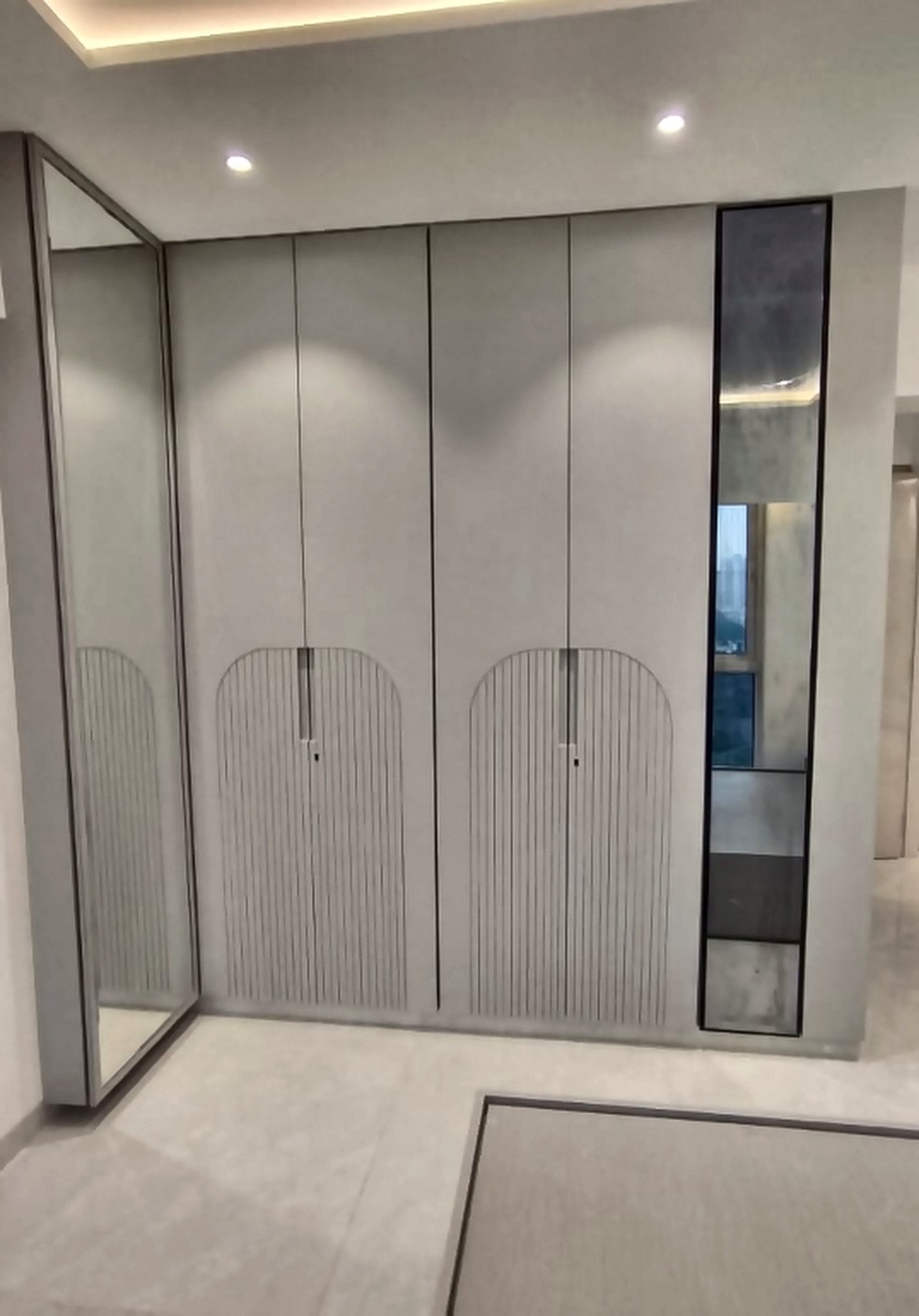
A small bedroom rarely needs a clever shape. It needs the correct depth, clear passage, full-height storage and internals based on actual clothes. Start with those measurements before choosing flutes or mirror panels.
Start with three clearances
- Wardrobe depth: 600 mm for hanging clothes.
- Passage in front: 750 mm minimum; 900 mm feels comfortable.
- Bedside gap: 450 mm minimum if someone uses that side daily.
If hinged shutters cannot open inside those clearances, use sliding shutters rather than shrinking the wardrobe depth.
Sliding versus hinged
Sliding shutters save swing space and create a clean wide front, but only half the wardrobe opens at once and good tracks cost more. Hinged shutters offer full access and useful inside-door storage. Choose sliding for tight bed clearances, not simply because it looks modern.
An internal layout that works
Use a 1050–1150 mm hanging section for shirts and jackets, a taller 1500 mm bay for dresses, drawers between knee and waist height, and shelves no deeper than one folded stack. Keep the locker away from the obvious centre bay. Lofts should hold luggage and seasonal bedding, not daily clothes.
Make a large wardrobe look lighter
Match the shutter colour to the wall, keep handles slim and integrate one full-height mirror to reflect daylight. Vertical flutes make the ceiling feel taller. Avoid chopping a small front into many contrasting panels; the visual lines create clutter even when the room is tidy.
Common mistakes
- Stopping at seven feet and wasting the space above.
- Putting drawers at floor level.
- Using shallow cabinets that crease hangers.
- Ignoring a damp external wall.
- Buying sliding hardware without a serviceable brand.
Explore custom wardrobes by Eminence Living.
Prices are planning ranges for Mumbai in 2026, not quotations. Measurements, materials and site conditions decide the final number.
